What you'll learn
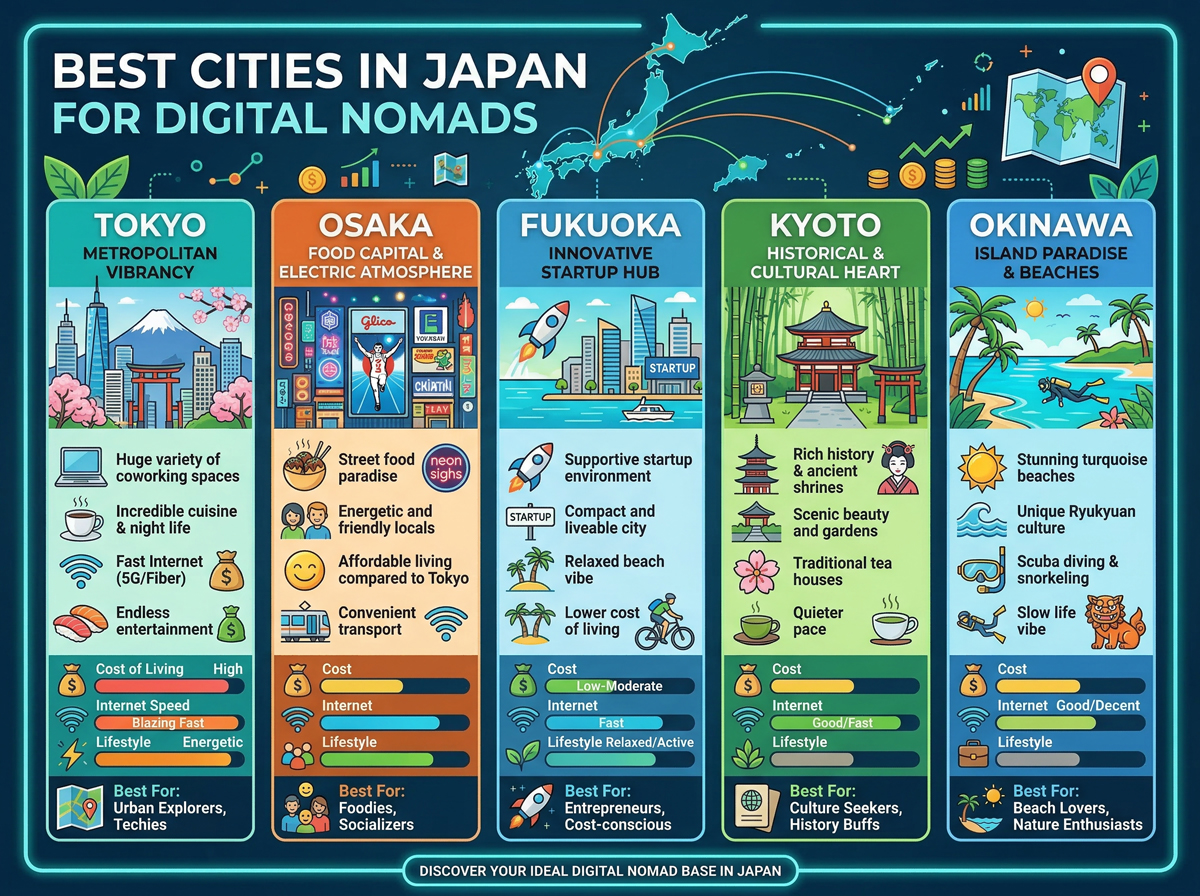
- Best for global options: Tokyo offers the deepest coworking, community, and transport stack, but rent often pushes budgets to the high band.
- Best value big city: Osaka often gives big-city convenience at lower monthly cost than central Tokyo for similar daily comfort.
- Best balance for many nomads: Fukuoka is frequently the sweet spot for cost, livability, startup energy, and quick access to nature.
- Lifestyle specialists: Kyoto, Sapporo, and Okinawa can be excellent when culture, climate, or outdoor rhythm matters more than pure convenience.
Key points
Rule: Match city pace to client load—not Instagram aesthetics. Pick one row, then book one base this week.
\ Pick a city row—then search stays /
※Rates and cancellation rules are shown on Agoda at checkout.
Best choice by situation — 3 branches only
On mobile, swipe the table horizontally.
| Your situation | Conclusion | Next step |
|---|---|---|
| 7-day high output | Tokyo | Tokyo guide |
| 14-day balance | Osaka | 6+ nights minimum |
| 30-day routine | Fukuoka | Weekend trips only |
Pick the row that matches you—then act this week.
Stop parallel-comparing ten options. Pick your row, then complete the next step this week.
10-second gate: Can you execute the next step with your current visa, budget, and connectivity plan? If not, fix that first.
Japan is becoming one of the most practical destinations for remote workers who value safe cities, stable infrastructure, and high-quality daily life. The country is not one-size-fits-all, though: your city choice usually decides whether your month feels focused and sustainable, or expensive and exhausting.
This guide compares the best cities in Japan for digital nomads using the factors that matter in real life: cost of living, work environment, internet reliability, and lifestyle fit. If you are still deciding whether Japan itself is right for you, read Is Japan good for digital nomads? first.
Why Japan Is Popular with Digital Nomads
Japan continues to attract remote workers for reasons that usually matter over months, not just on a two-week trip.
- Personal safety: Many nomads report feeling comfortable with late-day movement in major cities.
- Transport reliability: Predictable trains make planning meetings and weekend movement easier.
- Internet quality: Strong baseline connectivity in urban areas supports real work, not just messaging.
- Depth of lifestyle: Food, neighborhoods, and seasonal variety support longer stays.
- Clearer legal path: Japan now has an official digital nomad visa framework for qualifying applicants.
For visa details and eligibility, see Digital Nomad Visa Japan.
1. Tokyo — Best for Global Remote Work Infrastructure
Tokyo is usually the strongest choice if your top priority is optionality: more coworking spaces, more neighborhoods, more events, and easier access to international business services.
Why Tokyo stands out
- Largest coworking and cafe-work ecosystem in Japan
- Dense international business and expat networks
- Excellent transit coverage across work and social zones
- Strong convenience for short-notice meetings and events
Typical monthly planning range: ¥300,000 – ¥450,000+
Popular areas: Shibuya, Shinjuku, Meguro, Daikanyama
Tokyo tends to work best for nomads who can fund higher rent in exchange for speed, variety, and business access. For neighborhood-level choices, see Tokyo digital nomad where to live.
2. Osaka — Best Value Big-City Option
Osaka often delivers a practical middle ground: strong urban convenience with lower rent pressure than central Tokyo in many equivalent setups.
Why many nomads choose Osaka
- Typically lower rent than comparable Tokyo neighborhoods
- Friendly local culture and approachable social vibe
- Strong food scene from low-cost to premium
- Good coworking coverage in central areas
Typical monthly planning range: ¥220,000 – ¥350,000
Popular areas: Namba, Shinsaibashi, Umeda
Osaka is often a strong first base for nomads who want city energy without Tokyo-level fixed costs.
3. Fukuoka — Best Balance for Cost and Livability
Fukuoka is frequently recommended as a "balanced" city for remote workers: affordable enough to sustain, modern enough to work smoothly, and compact enough to reduce daily friction.
Why Fukuoka performs well
- Startup-friendly reputation and growing founder community
- Lower rent pressure than major Tokyo wards in many cases
- Strong internet and practical urban layout
- Easy access to beaches, parks, and short nature escapes
Typical monthly planning range: ¥180,000 – ¥300,000
Popular areas: Tenjin, Daimyo, Hakata
For many location-independent workers, Fukuoka is where quality of life and cost control feel most balanced.
4. Kyoto — Best for Culture-First Slow Living
Kyoto works well for nomads who want a calmer rhythm and strong cultural depth, even if daily convenience can feel less "always-on" than Tokyo or Osaka.
Why Kyoto attracts long-stay workers
- Historic environment and high walkability in key districts
- Cafes and quiet routines suited to deep-focus work
- Strong seasonal experiences throughout the year
- Good rail access to Osaka for occasional big-city days
Typical monthly planning range: ¥220,000 – ¥330,000
Kyoto can be excellent for writers, designers, and focused builders who prefer slower, quieter daily pacing.
5. Sapporo — Best for Space and Outdoor Rhythm
Sapporo is often underrated in global nomad conversations. It can be a strong base if you prefer larger living spaces and cooler weather for part of the year.
Why Sapporo can be a hidden gem
- Generally lower rent and more spacious apartments
- Strong food culture and easy daily living
- Access to nature and winter sports
- Less crowded pace than major Honshu hubs
Typical monthly planning range: ¥180,000 – ¥280,000
Winter conditions are serious, so heating budget and snow tolerance should be part of your decision model.
6. Okinawa — Best for Island Lifestyle
Okinawa offers a completely different atmosphere from mainland Japan. It is often chosen by nomads prioritizing climate and pace over dense urban convenience.
Why Okinawa appeals to remote workers
- Beach-oriented lifestyle and warm weather
- Relaxed tempo compared with major metro centers
- Good fit for people who recharge through nature and ocean access
Typical monthly planning range: ¥200,000 – ¥320,000
Okinawa can be ideal for creative or asynchronous work styles, but plan around weather and transport limitations compared with mainland hubs.
Prefectural programs: Nagasaki Nomad Residency 2026
City comparisons above focus on where you pay your own rent. Japan also runs selective prefectural residencies—subsidized months for remote workers who contribute to local communities.
The Nagasaki Nomad Residency 2026 is the highest-signal program in 2026: applications opened July 1, 20 participants (two-thirds international target), program dates October 19–November 14. Covered: accommodation, in-prefecture transport, coworking access. Not covered: flights, meals, visa sponsorship.
When to pick Nagasaki over Tokyo/Osaka/Fukuoka on this page: You want a structured one-month Kyushu immersion with official housing—not maximum metro optionality. The 2025 pilot reported 600+ applications; treat it as competitive. For application steps and visa separation, read the dedicated guide—not this city comparison alone.
When to stay on the city table above: You need a self-directed base for 30+ days without an application window, or you require Tokyo-scale coworking depth from day one.
How to Choose the Right City
The best city is the one that fits your constraints and work rhythm, not the one with the strongest social-media brand.
On mobile, swipe the table horizontally.
| Your priority | City to start with |
|---|---|
| Maximum global-city optionality | Tokyo |
| Big-city life at lower fixed cost | Osaka |
| Balanced cost and livability | Fukuoka |
| Culture and slower daily rhythm | Kyoto |
| Space and outdoor lifestyle | Sapporo |
| Beach-first remote routine | Okinawa |
After choosing a city, set up your day-one logistics in this order: legal stay, housing, and connectivity. If connectivity is your next step, check Airalo review (Japan context) and eSIM vs pocket Wi‑Fi in Japan.
Your planning week: execution order
Remote workers lose the most time in the gap between "I researched Japan" and "I booked one base." Treat this page as a decision tool—not a bookmark graveyard. The goal is one completed action per week until arrival.
Monday — confirm your row
Pick the situation table row that matches your visa, budget, and trip length. If two rows feel equally true, choose the more conservative one: shorter stay, higher insurance proof, clearer connectivity. Write your row in one sentence at the top of your notes app.
Tuesday — kill parallel tabs
Shortlist two options maximum for whatever this article covers (stay, eSIM, policy, or money rail). Open official pricing or checkout pages—not ten comparison blogs. Parallel research without a decision date burns calendar time and peak-season inventory.
Wednesday — run the checklist
Work through the Japan Setup Checklist 2026 in order. Steps 1–3 (SIM, insurance, money) protect week one. Do not skip them because hotel photos are more fun to browse.
Thursday — validate connectivity
If client calls matter, confirm backup internet before you rely on hotel Wi-Fi alone. Read eSIM vs pocket WiFi and install or order before departure when possible.
Friday — book or buy one thing
Complete one non-refundable-safe action: hold a flexible stay, buy an eSIM test plan, or purchase insurance that matches your certificate needs. Momentum beats perfection.
Iron rule before you close this tab
Reading ten more guides without booking, insuring, or connecting is how remote workers lose peak inventory and client trust in the same month. Pick your row, run the checklist, and act this week.
Hub: Digital nomad in Japan — complete guide · Fit: Is Japan good for digital nomads? · Visa: Digital nomad visa Japan
Express lane | Next step
Shortest path before you land
SIM: Airalo Japan review · Insurance: SafetyWing guide · Money: Wise card for Japan
Then run the Japan Setup Checklist 2026 (10 steps).
Complete SIM and insurance before you optimize hotel amenities—arrival week is too late for preventable setup debt.
Works well
- Clear next step after one table row
- Links to deeper Japan DN guides
- Action-first structure for remote workers
Common failures
- Endless research without booking or setup
- Ignoring visa or insurance wording
- No backup internet before client calls
Connectivity note
Your internet plan is part of accommodation quality—not a separate decision. Use primary Wi-Fi, secondary eSIM/SIM, and one emergency workspace option.
On arrival day, tether once from your phone to confirm backup works before you need it for a client call.
Compare: eSIM vs pocket WiFi · best unlimited WiFi
Pre-arrival checklist
Budget band
You set a realistic monthly range in yen and tested city fit against it (Tokyo often higher, Fukuoka often lower).
Work environment
Your daily setup (home desk, coworking, cafe) is available near your target neighborhood, not only in a central district 40+ minutes away.
Commute friction
You checked practical transit time for your real routine (morning calls, evening social events, airport transfers).
Climate tolerance
You selected city by season preference (summer humidity, winter snow, typhoon period) rather than photos only.
Connectivity backup
You prepared primary and backup mobile data, and verified network details for calls, VPN, uploads, and tethering.
Stay legality
You confirmed visa/stay rules for your nationality and trip purpose before paying deposits.
\ Secure your base before micro-trips /
※Rates and cancellation rules are shown on Agoda at checkout.
First week after arrival
Stabilize connectivity and routine before you expand sightseeing.
Day 1
Internet test, desk setup, route mapping.
Day 2
First deep-work block + backup location test.
Day 3
Lock morning and evening routines.
Day 4–5
Normalize output; protect delivery windows.
Day 6–7
Explore locally without breaking schedule.
Why this works
One clear decision path beats ten parallel tabs. Act this week on the row that matches you—that is the operating rule.
Memo
Visa: digital nomad visa Japan · Programs: Nagasaki Residency 2026 · Setup: Digital Nomad Setup Japan · Hub: Complete Japan guide
Related articles
-

-
Nagasaki Nomad Residency 2026: How to Apply, Dates & What the Free Month Covers
\ Applications open July 1 — subscribe first / Subscribe at official site ※Program rules and dates—c ...
続きを見る

-
-
Where to Live in Tokyo as a Digital Nomad (2026) — Neighborhoods, Rent & Tradeoffs
\ Shortlist two Tokyo neighborhoods—then search / Search Tokyo stays on Agoda ※Rates and cancellatio ...
続きを見る
-
-
Cost of Living in Japan for Digital Nomads (2026) — Budget Ranges, Tokyo vs Osaka vs Fukuoka
\ Model rent—then compare work-ready stays / Search stays on Agoda ※Rates and cancellation rules are ...
続きを見る

-
-
Digital Nomad in Japan: The Complete Guide for Foreign Visitors (Stay, Budget, Wi-Fi, and Booking Smart)
\ Compare work-ready stays in Japan / Search stays on Agoda ※Rates, availability, and cancellation r ...
続きを見る


https://wanderwork.jp/workation-city-guide/tokyo-digital-nomad-where-to-live/
https://wanderwork.jp/workstyle-tips/cost-of-living-japan-digital-nomads/
https://wanderwork.jp/workation-city-guide/digital-nomad-setup-japan/
FAQ
Should I decide everything before booking?
No—lock the highest-risk items first (stay, connectivity, insurance), then refine with the setup checklist.
Where should I start if Japan is new to me?
Read Is Japan good for digital nomads?, then follow the express lane above.
Article summary
- Pick your situation row first—then act this week
- Layer internet: Wi-Fi + eSIM backup
- Run the Japan setup checklist before non-refundable bookings
Block 90 minutes this week to confirm your row, run the checklist, and complete one high-leverage action.
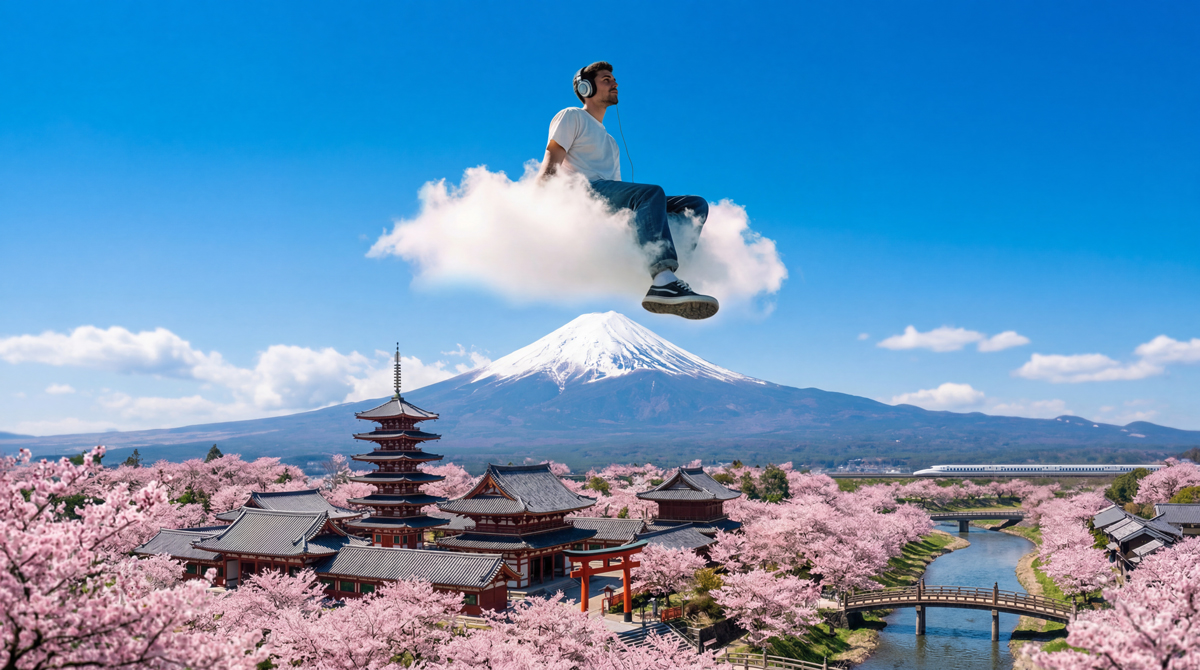
After you pick Tokyo, Osaka, or Fukuoka, book one work-ready base for 7+ nights before planning side trips.
\ City choice is a workflow decision /
※Rates and cancellation rules are shown on Agoda at checkout.
※This article is general information for foreign visitors planning remote work in Japan. It does not guarantee booking outcomes, visa status, or internet performance. Confirm listing details, cancellation terms, and official requirements before you pay. Affiliate links may earn commission at no extra cost to you.