What you'll learn
- Best for network and events: Shibuya and nearby hubs maximize coworking density, meetups, and late social options, but rent and noise can rise quickly.
- Best for livable premium: Ebisu, Meguro, and Daikanyama often balance comfort and access, though monthly inventory can be expensive and book fast.
- Best for practical transit-heavy lives: Shinjuku, Shinagawa, and Gotanda can reduce transfer friction for airport and intercity movement, with tradeoffs in atmosphere.
- Best for calmer residential rhythm: Setagaya pockets, Sancha, and parts of north Tokyo can improve sleep and focus if you accept longer train segments.
Key points
Two actions this week: ① Pick your situation row ② Complete the next step before you open another guide. Parallel research without action burns calendar time.
\ Shortlist two Tokyo neighborhoods—then search /
※Rates and cancellation rules are shown on Agoda at checkout.
Best choice by situation — 3 branches only
On mobile, swipe the table horizontally.
| Your situation | Conclusion | Next step |
|---|---|---|
| Meeting-heavy week | Major hub adjacency | Direct line priority |
| Quiet deep work | Side street residential | Noise review filter |
| First Tokyo trip | One hub, 7+ nights | City compare |
Pick the row that matches you—then act this week.
Stop parallel-comparing ten options. Pick your row, then complete the next step this week.
10-second gate: Can you execute the next step with your current visa, budget, and connectivity plan? If not, fix that first.
Tokyo is not one city. It is dozens of micro-cities connected by trains, each with a different balance of noise, commute pressure, English support, and rent burden. Where you live will often shape your work quality more than which cafe you bookmark first.
This guide helps you choose a Tokyo base using practical filters: budget band, call-heavy vs deep-focus work, Haneda vs Narita travel bias, and nightlife tolerance. If you are still deciding between Tokyo and other cities first, read Best Cities in Japan for Digital Nomads and Cost of Living in Japan. For stay legality, see Digital Nomad Visa Japan.
-

-
Best Cities in Japan for Digital Nomads【2026】Top Places to Live & Work
\ Pick a city row—then search stays / Search stays on Agoda ※Rates and cancellation rules are shown ...
続きを見る

Choose Like a Product Manager: Criteria First
Before you commit to aesthetics, rank these constraints in order:
| Question | Why it matters |
|---|---|
| What is your housing ceiling in yen? | Tokyo separates "possible" and "painful" very quickly. |
| Are your weeks call-heavy or deep-focus heavy? | Station-front convenience and sleep quality often pull in opposite directions. |
| Do you fly via Haneda or Narita more often? | Keikyu/Monorail logic vs Narita Express logic can change your best district. |
| Do you need English-first daily support? | Some areas reduce onboarding friction but raise rent expectations. |
Practical rule: optimize sleep and focus first, commute second, social optics last.
Common Mistakes
- Booking "cool" without testing nights: train and street noise become visible after dark.
- Optimizing only for social media aesthetics: weekend noise can erase weekday productivity gains.
- Ignoring supermarket and pharmacy access: daily operations drive long-stay satisfaction.
- Assuming all monthly rooms have solid internet: verify in-building reality and prepare backup data.
- Paying for premium coworking far from home: commute tax can quietly burn both time and focus.
Tokyo 101: Wards, Lines, and "One Stop Out"
Most digital nomads anchor inside the 23 wards or near their edges. The Yamanote loop is useful, but many high-function routes for daily life sit outside that mental model: Hanzomon, Fukutoshin, Oedo, Keio, and others.
Living one or two stops outside a hot station can often improve sleep and rent efficiency if you accept 10-15 extra train minutes. That tradeoff is central to sustainable Tokyo budgeting.
Neighborhoods Nomads Actually Debate
The ranges below are planning anchors, not listing guarantees. Seasonal demand, furnishing level, building age, and contract terms can move numbers materially.
Shibuya and Harajuku - Energy, Noise, Global Default
Vibe: Youthful, dense, global retail and food concentration.
Why people pick it: Coworking and meetups cluster nearby, and English support is relatively visible.
Friction: Rent is usually high; weekend crowd density and noise can affect sleep.
Rough monthly intuition: Often around ¥200,000 - ¥400,000+ for furnished solo convenience.
Best for: Nomads optimizing network surface area over quiet.
Shinjuku - Transit Gravity and 24/7 Options
Vibe: Large interchange ecosystem with almost every service available.
Why people pick it: Practical line access and broad inventory in monthly and hotel-style setups.
Friction: Some pockets are not ideal for light sleepers; rush-hour crowding is real.
Rough monthly intuition: Often around ¥180,000 - ¥350,000, highly building-dependent.
Best for: Travelers who value route optionality and can tolerate density.
Meguro, Ebisu, and Daikanyama - Livable Premium Triangle
Vibe: Cafes, side streets, and high daily comfort without full business-district stiffness.
Why people pick it: Strong lifestyle quality and reliable access to central hubs.
Friction: Premium pricing and fast-moving inventory in desirable pockets.
Rough monthly intuition: Often around ¥220,000 - ¥450,000+.
Best for: Remote workers prioritizing quality-of-life and willing to fund it.
Nakameguro, Sangenjaya, and Shimokitazawa - Quieter Creative Pockets
Vibe: Smaller-scale streets, independent shops, and creative local rhythm.
Why people pick it: Less tower-district intensity while staying connected to core zones.
Friction: Smaller units, stairs in older stock, and occasional line crowding at peaks.
Rough monthly intuition: Often around ¥160,000 - ¥320,000.
Best for: Writers, designers, and makers who prefer neighborhood texture over skyline prestige.
Minato - English-Friendly, Premium Cost
Vibe: Embassy and corporate gravity, broad international service access.
Why people pick it: Easier English-first onboarding for clinics, services, and short-term setup.
Friction: High rent baseline and localized nightlife noise in some blocks.
Rough monthly intuition: Often around ¥250,000 - ¥550,000+.
Best for: Nomads optimizing service convenience and business proximity more than cost efficiency.
Shinagawa and Gotanda - Airport and Shinkansen Practicality
Vibe: Business-travel convenience with strong intercity and Haneda access logic.
Why people pick it: Efficient for frequent flyers and weekly movers.
Friction: Some pockets feel functional rather than atmospheric.
Rough monthly intuition: Often around ¥180,000 - ¥380,000.
Best for: Nomads whose calendar is travel-heavy.
Ikebukuro and North Tokyo - Value Scanning Zone
Vibe: Dense retail and major-hub energy with mixed street profiles.
Why people pick it: Sometimes better space-per-yen versus southwest premium pockets.
Friction: Crowd density and evening pace can feel intense for some.
Rough monthly intuition: Often around ¥140,000 - ¥300,000.
Best for: Budget-conscious nomads still wanting major-station convenience.
Setagaya Pockets - Residential Calm with Tradeoffs
Vibe: More local and residential, often quieter at night.
Why people pick it: Better sleep profile and steady long-stay rhythm.
Friction: Some routes require extra transfers depending on your recurring destinations.
Rough monthly intuition: Often around ¥150,000 - ¥300,000.
Best for: Longer stays where cognitive performance depends on rest.
Housing Types: What "Tokyo Monthly" Really Means
Monthly furnished and serviced apartments
Pros: Less lease friction, furniture included, often easier onboarding.
Cons: Higher price per square meter and stricter cancellation terms.
Share houses
Pros: Lower entry friction and social layer.
Cons: Privacy and call environment can vary significantly by house rules.
Hotels and hotel-style monthlies
Pros: Operationally predictable for first-week landing.
Cons: Cost compounds over longer stays; desk ergonomics may be weak.
Coliving
If you want curated community and work-compatible routines, read What is coliving in Japan?. Not every listing labeled "nomad-friendly" is call-friendly in practice.
Coworking vs Home: Let Your Week Decide
Many nomads under-price commute friction and over-price neighborhood brand. If your calendar is call-heavy, a quiet home base often outperforms trendy districts. If your work depends on social collisions and events, Shibuya-adjacent coworking may repay itself.
A practical split for many profiles: three deep-work days at home, two network days in coworking, then choose housing close to where focus actually happens.
Money and Connectivity
- Money: Many nomads use Wise for Japan with IC transit/payment habits; also review Welcome Suica.
- Data: Compare unlimited Wi-Fi options, eSIM vs pocket Wi-Fi, and Airalo (Japan context) before landing.
- Insurance: Align your policy with the practical risk profile and stay rules via Japan nomad insurance guide.
Cost Reality Check
In most profiles, Tokyo consumes budget through housing first, then convenience choices. For full line-item planning, use Cost of Living in Japan for Digital Nomads.
-
-
Cost of Living in Japan for Digital Nomads (2026) — Budget Ranges, Tokyo vs Osaka vs Fukuoka
\ Model rent—then compare work-ready stays / Search stays on Agoda ※Rates and cancellation rules are ...
続きを見る

First Nights vs Longer Base
If you need a low-risk landing for week one, start with Where to Stay in Tokyo as a Digital Nomad and move to monthly inventory after testing noise and commute tolerance in person.
-
-
東京でデジタルノマドするならどこに泊まる?【エリア別おすすめ完全ガイド】
\ 東京ノマドの通信準備 / 海外eSIM比較を見る 結論:東京ノマドは渋谷・新宿・品川から1エリアに絞る作業環境・生活環境・滞在しやすさの3軸で、今週中に1エリアをメモ——これが鉄則です。 あなたの ...
続きを見る

Setup Checklist
Run Digital Nomad Setup Japan in sequence (connectivity, money, insurance, transit), so housing choices reinforce your work system instead of fighting it.
Your planning week: execution order
Remote workers lose the most time in the gap between "I researched Japan" and "I booked one base." Treat this page as a decision tool—not a bookmark graveyard. The goal is one completed action per week until arrival.
Monday — confirm your row
Pick the situation table row that matches your visa, budget, and trip length. If two rows feel equally true, choose the more conservative one: shorter stay, higher insurance proof, clearer connectivity. Write your row in one sentence at the top of your notes app.
Tuesday — kill parallel tabs
Shortlist two options maximum for whatever this article covers (stay, eSIM, policy, or money rail). Open official pricing or checkout pages—not ten comparison blogs. Parallel research without a decision date burns calendar time and peak-season inventory.
Wednesday — run the checklist
Work through the Japan Setup Checklist 2026 in order. Steps 1–3 (SIM, insurance, money) protect week one. Do not skip them because hotel photos are more fun to browse.
Thursday — validate connectivity
If client calls matter, confirm backup internet before you rely on hotel Wi-Fi alone. Read eSIM vs pocket WiFi and install or order before departure when possible.
Friday — book or buy one thing
Complete one non-refundable-safe action: hold a flexible stay, buy an eSIM test plan, or purchase insurance that matches your certificate needs. Momentum beats perfection.
Iron rule before you close this tab
Reading ten more guides without booking, insuring, or connecting is how remote workers lose peak inventory and client trust in the same month. Pick your row, run the checklist, and act this week.
Hub: Digital nomad in Japan — complete guide · Fit: Is Japan good for digital nomads? · Visa: Digital nomad visa Japan
Express lane | Next step
Shortest path before you land
SIM: Airalo Japan review · Insurance: SafetyWing guide · Money: Wise card for Japan
Then run the Japan Setup Checklist 2026 (10 steps).
Complete SIM and insurance before you optimize hotel amenities—arrival week is too late for preventable setup debt.
Works well
- Clear next step after one table row
- Links to deeper Japan DN guides
- Action-first structure for remote workers
Common failures
- Endless research without booking or setup
- Ignoring visa or insurance wording
- No backup internet before client calls
Connectivity note
Your internet plan is part of accommodation quality—not a separate decision. Use primary Wi-Fi, secondary eSIM/SIM, and one emergency workspace option.
On arrival day, tether once from your phone to confirm backup works before you need it for a client call.
Compare: eSIM vs pocket WiFi · best unlimited WiFi
Pre-arrival checklist
Budget ceiling
You set a realistic monthly housing cap in yen and tested at least two nearby "one-stop-out" alternatives.
Noise profile
You checked the block after 10pm and near last-train hours, not only daytime cafe conditions.
Call vs focus fit
Your unit, coworking fallback, and local environment match your actual week (call-heavy or deep-work heavy).
Airport bias
Your line choice fits Haneda or Narita reality instead of generic "Tokyo is connected" assumptions.
Daily essentials
Supermarket, pharmacy, laundry, and late food options are within realistic walk time.
Connectivity backup
You prepared main and backup data for calls, uploads, and hotspot work if in-room Wi-Fi degrades.
\ Book before you optimize sightseeing /
※Rates and cancellation rules are shown on Agoda at checkout.
First week after arrival
Stabilize connectivity and routine before you expand sightseeing.
Day 1
Internet test, desk setup, route mapping.
Day 2
First deep-work block + backup location test.
Day 3
Lock morning and evening routines.
Day 4–5
Normalize output; protect delivery windows.
Day 6–7
Explore locally without breaking schedule.
Why this works
One clear decision path beats ten parallel tabs. Act this week on the row that matches you—that is the operating rule.
Memo
Visa: digital nomad visa Japan · Setup: Digital Nomad Setup Japan · Hub: Complete Japan guide
Related articles
-
-
Best Cities in Japan for Digital Nomads【2026】Top Places to Live & Work
\ Pick a city row—then search stays / Search stays on Agoda ※Rates and cancellation rules are shown ...
続きを見る
-
-
Cost of Living in Japan for Digital Nomads (2026) — Budget Ranges, Tokyo vs Osaka vs Fukuoka
\ Model rent—then compare work-ready stays / Search stays on Agoda ※Rates and cancellation rules are ...
続きを見る
-
-
Digital Nomad in Japan: The Complete Guide for Foreign Visitors (Stay, Budget, Wi-Fi, and Booking Smart)
\ Compare work-ready stays in Japan / Search stays on Agoda ※Rates, availability, and cancellation r ...
続きを見る


https://wanderwork.jp/workation-city-guide/best-cities-japan-digital-nomads/
https://wanderwork.jp/workstyle-tips/cost-of-living-japan-digital-nomads/
https://wanderwork.jp/workation-city-guide/digital-nomad-japan-complete-guide/
FAQ
Should I decide everything before booking?
No—lock the highest-risk items first (stay, connectivity, insurance), then refine with the setup checklist.
Where should I start if Japan is new to me?
Read Is Japan good for digital nomads?, then follow the express lane above.
Article summary
- Pick your situation row first—then act this week
- Layer internet: Wi-Fi + eSIM backup
- Run the Japan setup checklist before non-refundable bookings
Block 90 minutes this week to confirm your row, run the checklist, and complete one high-leverage action.
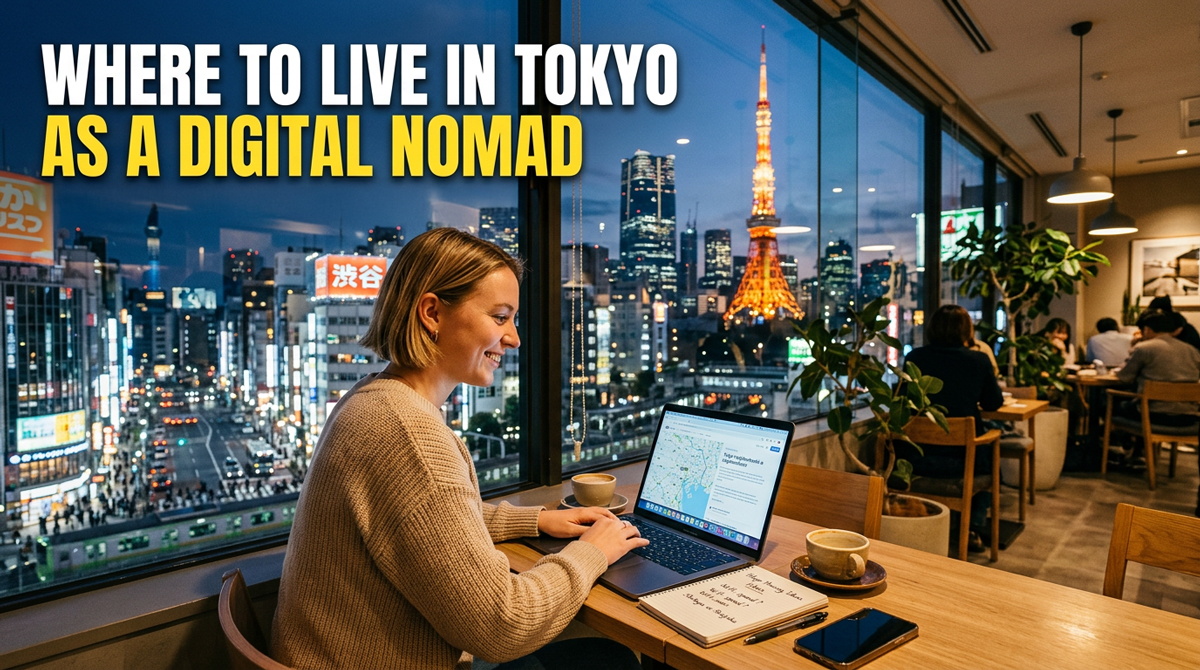
Tokyo inventory moves fast. Once your station-access row is clear, secure one listing with work evidence in reviews.
\ Neighborhood fit beats hero photos /
※Rates and cancellation rules are shown on Agoda at checkout.
※This article is general information for foreign visitors planning remote work in Japan. It does not guarantee booking outcomes, visa status, or internet performance. Confirm listing details, cancellation terms, and official requirements before you pay. Affiliate links may earn commission at no extra cost to you.