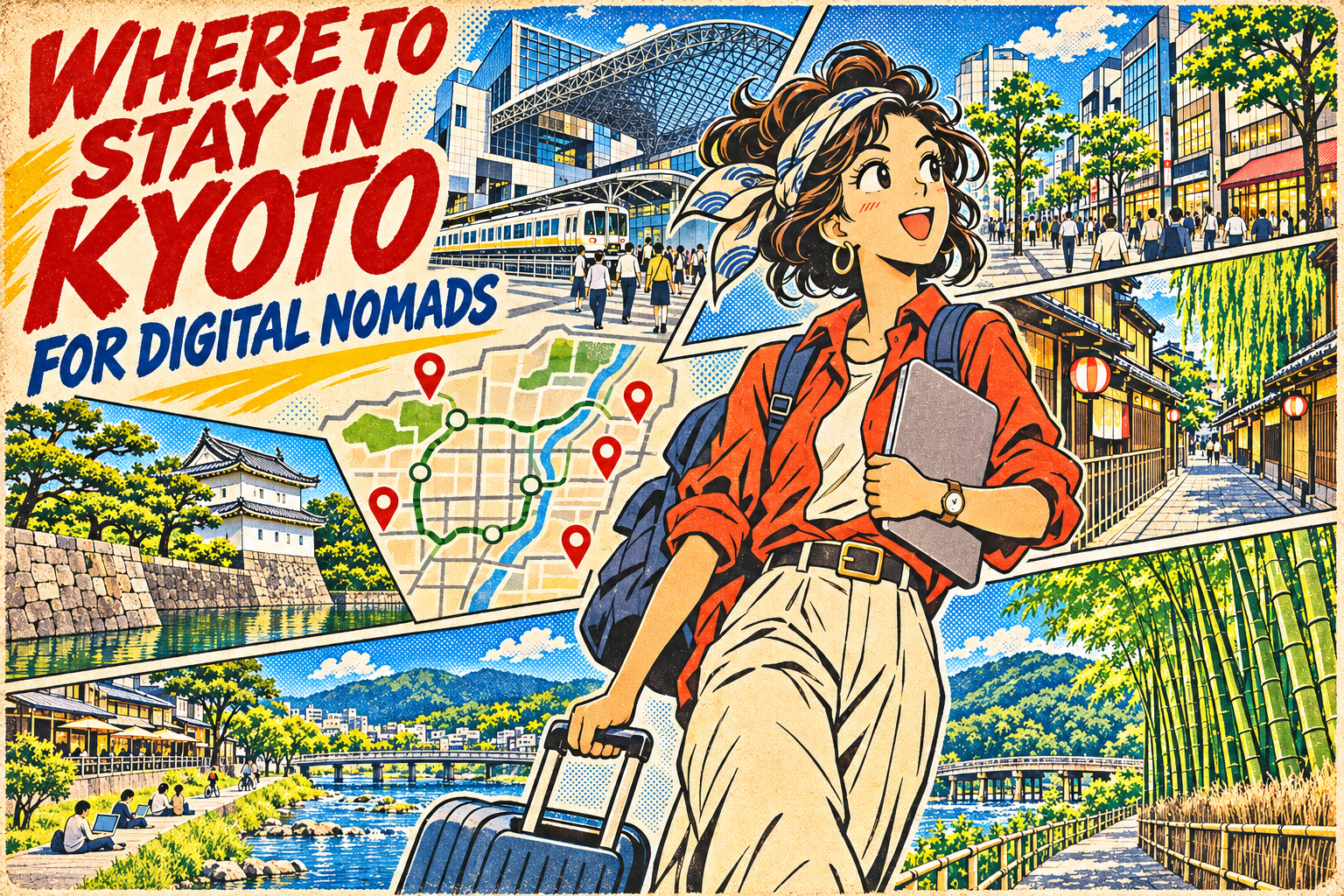

Quick answer: choose Shijo-Karasuma for the strongest work-first balance, Kyoto Station for maximum rail convenience, or Karasuma Oike and Nijo for a quieter central routine. Gion and Higashiyama deliver the classic Kyoto atmosphere but expose you to heavier visitor traffic; Imadegawa and Nishijin offer a calmer local base; Demachiyanagi and Okazaki suit university and creative rhythms; and Saga-Arashiyama works best as a scenery-first retreat. In Kyoto, the best address is usually the one that removes a daily bus ride.
Which Kyoto area fits your workweek?
Best overall balance: Shijo-Karasuma / Kawaramachi — coworking, dining and multiple rail options.
Easiest arrival and regional travel: Kyoto Station / Gojo — Shinkansen, JR and airport-oriented access.
Quiet central work base: Karasuma Oike / Nijo — two subway directions and calmer evenings.
Classic Kyoto atmosphere: Gion / Higashiyama — beautiful, expensive and crowd-sensitive.
Local value and deep focus: Imadegawa / Nishijin — slower rhythm and lower planning band.
University and creative routine: Demachiyanagi / Hyakumanben / Okazaki — cafés, culture and river access.
Nature-first retreat: Saga / Arashiyama — strong for early mornings, weak for an always-on city routine.

Why you can trust this guide
- Research basis: WANDERWORK planning ranges aligned with the Japan city comparison; area and transport positioning checked against Kyoto City Official Travel Guide, current rail guidance and official coworking operators
- Last checked: 2026-11-03
- Before you decide: Monthly ranges are planning anchors for furnished short stays, not ordinary residential rents or listing guarantees. Confirm total price, internet, desk, noise, cancellation rules, seasonal availability and legal stay conditions for your dates.
This guide answers one question: where should a remote worker stay in Kyoto? It does not rank temples or build a three-day sightseeing itinerary. The comparison starts with work, sleep, train access and crowd exposure, then treats culture and scenery as advantages rather than excuses for a difficult daily setup.
If you are still deciding between Japanese cities, compare the best cities in Japan for digital nomads. Kyoto is positioned there as a culture-first base with a comfortable total planning band of roughly ¥230,000–¥360,000 per month. Use the Japan cost-of-living planner to rebuild that number around your own housing and work needs, and check the Japan digital nomad visa guide before assuming your planned remote work is permitted.
Best choice by situation
| Your situation | Start with | Why |
|---|---|---|
| First Kyoto stay | Shijo-Karasuma or Kyoto Station | Easier orientation, lodging choice and train access |
| Call-heavy workweek | Karasuma Oike, Nijo or Shijo-Karasuma | Better coworking access with less sightseeing friction |
| Frequent Osaka days | Kyoto Station or Shijo-Karasuma | Direct JR or Hankyu logic depending destination |
| Culture outside the door | Gion / Higashiyama | Historic streets and east-side landmarks are walkable |
| Lower-cost local routine | Imadegawa / Nishijin | Calmer blocks and a lower furnished-stay planning band |
| University or creative rhythm | Demachiyanagi / Hyakumanben | Local cafés, campuses and Kamo River access |
| Quiet scenery-first month | Saga / Arashiyama | Early mornings and nature before day-trip crowds arrive |
Choose one work-first candidate and one lifestyle candidate. Do not compare all seven until every listing looks the same.
Explore hotels in Kyoto
Compare current availability around Kyoto, Japan before you commit to one area.
This hotel map contains affiliate links. WANDERWORK may receive a commission when you make a reservation, at no additional cost to you.
\ Choose the rail-and-work zone before the room /
Rates, taxes and cancellation rules are shown on Agoda at checkout.
Kyoto geography in two minutes: use rail first, buses second
Kyoto is not organised around one giant loop line. The Karasuma subway line runs north-south through Kyoto Station, Gojo, Shijo, Karasuma Oike and Imadegawa. The Tozai line runs east-west through Karasuma Oike toward Nijo and the eastern city. Hankyu is useful for Shijo-Karasuma, Kawaramachi and Osaka; Keihan follows the eastern side through Gion-Shijo and Demachiyanagi; JR solves Kyoto Station, Nijo, Arashiyama and regional trips.
Kyoto's official transport guidance recommends using trains and subways to get close to a destination because buses and road routes can become crowded. That advice matters even more for a resident routine. A beautiful room that requires a packed sightseeing bus for every coworking day is not a productive bargain. Check the official subway and train guide before committing to a bus-dependent address.
The 7 best Kyoto areas for digital nomads at a glance
These are furnished solo-stay planning anchors, not market averages. Cherry-blossom season, autumn foliage, weekends, cleaning fees and cancellation flexibility can change the final price substantially.
| Area | Best for | Rough monthly (JPY) | Crowd exposure | English support |
|---|---|---|---|---|
| Shijo-Karasuma / Kawaramachi | Work, dining and central optionality | ¥170,000–¥340,000+ | Medium–high | High |
| Kyoto Station / Gojo | Shinkansen, JR and easy arrival | ¥150,000–¥320,000+ | Medium–high | High |
| Karasuma Oike / Nijo | Quiet central work rhythm | ¥150,000–¥300,000 | Low–medium | Medium–high |
| Gion / Higashiyama | Historic atmosphere and short cultural stay | ¥180,000–¥380,000+ | High | High |
| Imadegawa / Nishijin | Value, local life and deep focus | ¥110,000–¥230,000 | Low–medium | Medium |
| Demachiyanagi / Hyakumanben / Okazaki | University, culture and creative routine | ¥120,000–¥250,000 | Medium | Medium |
| Saga / Arashiyama | Nature and slow retreat | ¥130,000–¥280,000 | High by day | Medium |
Price the whole routine. A cheaper room can lose through coworking fees, taxi use after missed buses, extra transfers, weak desks or the inability to take calls at home.
1. Shijo-Karasuma and Kawaramachi — best overall balance
Shijo-Karasuma is Kyoto's clearest work-first default. The official accommodation guide describes it as a business district, while nearby Shijo-Kawaramachi is the commercial centre. Together they give you the Karasuma subway line, Hankyu access, dense dining and a walkable route toward the Kamo River and Gion.
Why it works
- Strong coworking and business-service choice
- Direct subway access to Kyoto Station
- Hankyu access toward Osaka from Karasuma or Kawaramachi
- Dining and daily services remain useful after sightseeing hours
Trade-offs
- Kawaramachi and Nishiki-facing blocks can be crowded
- Central furnished stays carry a convenience premium
- A lively street address can conflict with sleep and calls
.andwork Kyoto publishes drop-in, weekly and monthly options near Kyoto Shiyakushomae, within the broader downtown zone. Common Room Shijo Karasuma also advertises drop-in work use. Verify current hours, call rules and payment requirements directly before booking accommodation around a workspace.
Best for a first one-month stay, client calls and people who want Kyoto culture without making every workday a sightseeing commute.
2. Kyoto Station and Gojo — best for rail convenience
Choose Kyoto Station when Shinkansen trips, airport arrival, luggage or regional travel dominate your calendar. The official guide notes the area's broad hotel inventory and JR access toward Fushimi Inari and Arashiyama. Gojo moves you one subway stop north, often giving a more residential evening while retaining the Karasuma line.
Why it works
- Shinkansen and regional JR access
- Direct subway movement toward Shijo and Karasuma Oike
- Broad business-hotel and serviced-stay inventory
- Easier first and last day with luggage
Trade-offs
- The station zone is functional rather than intimate
- Bus terminals and underground routes take time to learn
- Some budget rooms solve location but fail on desk space
Best for short project stays, frequent Osaka or Tokyo travel and people who value operational simplicity over a postcard outside the door.
3. Karasuma Oike and Nijo — best quiet central work base
Karasuma Oike is where Kyoto's north-south and east-west subway lines meet. Nijo extends the same work-first logic westward with JR access and calmer residential blocks. This pairing makes it easier to reach downtown without sleeping inside its busiest streets.
Why it works
- Two subway directions from Karasuma Oike
- Central access with less nightlife exposure than Kawaramachi
- Practical cycling and walking grid
- Nijo adds JR access toward Saga-Arashiyama
Trade-offs
- Less late-night energy at the door
- Coworking choice depends on the exact side of the district
- Nijo can add a transfer for east-side destinations
Best for call-heavy workers, longer stays and anyone who wants Kyoto to feel like a home base rather than a permanent excursion.
4. Gion and Higashiyama — best for classic Kyoto atmosphere
Gion and Higashiyama deliver the Kyoto image many visitors expect: traditional streets, temples, restaurants and early-morning walking routes. The official area guide also makes the trade-off clear through its congestion guidance: this is one of the city's most visited zones.
Why it works
- Historic streets and major east-side sights are walkable
- Keihan access from Gion-Shijo or nearby stations
- Strong international visitor services
- Excellent for a short culture-first stay
Trade-offs
- Heavy daytime and seasonal crowd exposure
- Premium accommodation pricing in famous blocks
- Older buildings require careful checks for insulation, stairs and desk space
- A quiet-looking lane does not guarantee quiet mornings
Best for a one-week stay or a schedule that protects early mornings. For a call-heavy month, compare downtown or Karasuma Oike before paying for atmosphere.
5. Imadegawa and Nishijin — best local value and deep focus
Imadegawa sits on the Karasuma line north of the city centre. Nishijin spreads west into older residential and craft districts. The area offers a slower rhythm and easier access to Kyoto Imperial Palace Park, while keeping Shijo and Kyoto Station on one subway line from Imadegawa.
NextPath Karasuma Imadegawa publishes English guidance, drop-in access, meeting space and daily opening hours near Imadegawa Station. Impact Hub Kyoto operates from the Nishijin area; confirm its current day-use conditions directly.
Why it works
- Lower furnished-stay planning band than central tourist districts
- Calmer environment for writing and deep work
- Karasuma-line access from Imadegawa
- More local daily rhythm than Kyoto Station or Gion
Trade-offs
- Nishijin addresses can become bus-dependent
- English support is less uniform away from major facilities
- Restaurants and late services thin out by block
Best for writers, designers and one- to three-month stays built around routine rather than nightlife.
6. Demachiyanagi, Hyakumanben and Okazaki — best university and creative rhythm
Demachiyanagi and Hyakumanben combine university energy, the Kamo River and access to the Keihan and Eizan lines. Okazaki sits farther south near museums and cultural institutions. This east-side cluster suits people who want cafés, cycling and a creative daily environment.
Coffice publishes English instructions, drop-in use and meeting options in Jodoji near the Philosopher's Path. Its official site notes that the operating app itself is Japanese-only, so read the English setup guide before relying on it for a first call day.
Why it works
- University and cultural atmosphere
- Kamo River access for a repeatable outdoor routine
- Keihan rail from Demachiyanagi
- Strong fit for asynchronous and creative work
Trade-offs
- Some addresses remain bus-heavy
- Fewer late-night services than downtown
- Workspace onboarding and local systems may require more Japanese
Best for independent workers who value local texture and can test their exact rail or cycling route before booking.
7. Saga and Arashiyama — best nature-first retreat
Arashiyama is one of Kyoto's major scenic districts. The official accommodation guide notes JR and Randen access, early-closing restaurants and a much quieter atmosphere outside peak visitor hours. That combination makes it a deliberate retreat, not a default city base.
Why it works
- Scenic morning and evening routine
- JR access to Kyoto Station direction
- Strong separation between work retreat and city intensity
- Lodging with more destination character
Trade-offs
- Day-trip crowds can be severe around headline sights
- Restaurants and cafés close earlier than downtown
- Coworking and call-booth choice is thin
- Central meetings create more travel friction
Best for a focused week, creative retreat or low-meeting schedule. If your work needs daily calls or spontaneous networking, stay central and visit Arashiyama early instead.
Where should you avoid staying in Kyoto?
Avoid a crowd-and-transport mismatch, not an entire neighborhood. Kyoto's common errors are paying for a famous view while depending on crowded buses, assuming an old building has call-ready insulation, or treating a tourist café as an office.
Reject a listing when:
- every workday depends on one sightseeing bus route;
- recent reviews repeatedly mention street, temple-bell or guest noise that conflicts with your schedule;
- the room cannot confirm a usable desk and recent in-room internet evidence;
- luggage requires a long bus transfer during peak arrival hours;
- the total hides cleaning, utilities, deposits or inflexible seasonal cancellation;
- your only call backup is a café in a high-traffic visitor zone.
Gion and Arashiyama are not "bad" areas. They are bad defaults for a worker whose calendar needs quiet calls and central meetings. The exact block, building and repeated route matter more than the district name.
Cheapest practical Kyoto areas for a remote worker
Start with Imadegawa, Nishijin, Nijo, Gojo and Hyakumanben, then test the route to one real workspace. These areas can reduce the central-tourist premium without forcing you to the far edge of the city.
Use this order:
- Set an all-in furnished-housing ceiling in yen.
- Add the coworking or call-booth cost your job requires.
- Price your repeated route and count bus dependence.
- Check the stay against Kyoto's ¥230,000–¥360,000 comfortable total band.
- Reject a low price when seasonal cancellation, internet or sleep evidence is weak.
Kyoto Station or downtown for a first stay?
Choose Kyoto Station for Shinkansen travel, luggage simplicity and a broad hotel search. Choose Shijo-Karasuma or Kawaramachi for work, dining and a more useful evening routine.
For a month, Shijo-Karasuma usually wins the balanced decision. For three nights or repeated regional trips, Kyoto Station can remove more friction. Karasuma Oike is the quieter third option that first-time visitors often overlook.
Kyoto or Osaka as your remote-work base?
Choose Kyoto when culture, walking, cycling and deep-focus routine matter more than late-night optionality. Choose Osaka when coworking depth, nightlife, airport access and big-city convenience dominate.
The cities are close enough to visit each other, but commuting between them repeatedly is still a workflow cost. If you have meetings in Osaka several times each week, Kyoto Station or the Hankyu side of downtown becomes more defensible. If Osaka is merely a weekend option, choose the Kyoto neighborhood that supports your daily work.
Coworking, calls and café etiquette
Kyoto has viable coworking, but it is less forgiving of vague planning than Tokyo or Osaka. Check whether a space is true drop-in, reservation-based or membership-only. Confirm phone-call zones, booth booking, staffed hours, accepted payment and English onboarding.
Useful current starting points include:
- .andwork Kyoto for downtown drop-in, weekly and monthly options;
- NextPath Imadegawa for English guidance and drop-in use near the Karasuma line;
- Coffice for east-side drop-in work with an English setup guide;
- station-area workspaces when rail convenience matters more than community.
A café purchase is not a license for a two-hour video call. Use cafés for light asynchronous work only when the venue permits laptops and seats are available. Use coworking or a reservable room for client meetings and confidential work.
Plan around Kyoto's crowd calendar
Spring blossoms, autumn foliage, weekends and major holidays can affect accommodation, roads and public transport. Kyoto's official guide provides a congestion forecast for major visitor areas and recommends shifting time or route when possible.
For a remote worker, use that information operationally:
- schedule sightseeing early and protect core work hours;
- choose rail before a bus on high-demand routes;
- avoid moving accommodation during the busiest weekend of your stay;
- send luggage separately when a crowded bus would be the only arrival route;
- keep one no-tourism day each week so Kyoto remains a home, not a checklist.
Match the housing type to your stay length
3–7 days: remove arrival friction
Use a flexible hotel or serviced stay near Kyoto Station or downtown. Pay for train access, luggage handling and cancellation before chasing a residential feeling.
1–4 weeks: test the work zone
Compare apartment hotels, weekly products and private rooms on desk, laundry, internet and total cost. Shijo-Karasuma, Karasuma Oike and Gojo are strong first scans.
1–3 months: optimise the local routine
Furnished monthly apartments, share houses and coliving become more relevant. Imadegawa, Nishijin, Nijo and Demachiyanagi can outperform a famous central address when the rail or cycling route works.
Up to 6 months: buy sustainability
Prioritise groceries, sleep, laundry, backup internet, seasonal temperature control and a repeatable workspace. Confirm that the contract and planned activity fit your immigration status.
A one-week Kyoto decision workflow
Monday — define the repeated week
Write one sentence: "I need three quiet call days," "I need Osaka twice a week," or "I need a culture-first retreat."
Tuesday — choose two areas
Pair one practical base with one lifestyle base: Shijo-Karasuma plus Gion, or Kyoto Station plus Imadegawa.
Wednesday — remove bus dependence
Test the route to coworking, groceries and your most repeated destination. Prefer a train, subway, bicycle or walkable route.
Thursday — verify the room
Request desk photos, current Wi-Fi evidence, laundry details, heating or cooling information and the complete fee breakdown.
Friday — book flexibly
Book the first week or a cancellation-friendly stay. Do not lock an entire season because the street looked quiet in one photograph.
Pre-booking checklist
Housing and work
- Total price includes utilities, cleaning and mandatory fees
- Room has a usable desk and chair, not only a low table
- Recent in-room internet evidence is available, with backup mobile data planned
- Noise reviews fit your call and sleep schedule
- A call-friendly workspace is reachable without a sightseeing bus
Transport, season and legal stay
- Repeated routes work by rail, bicycle or walking where possible
- Arrival route works with luggage and the actual check-in time
- Seasonal cancellation rules remain acceptable
- Visa or status of residence fits the planned activity and duration
Where to stay in Kyoto: FAQ
What is the best area to stay in Kyoto for a digital nomad?
Shijo-Karasuma is the strongest overall choice because it combines the Karasuma subway line, downtown services, coworking and access toward Kyoto Station and Osaka. Choose Karasuma Oike for quieter central living or Kyoto Station for frequent rail travel.
Where should a first-time visitor stay in Kyoto?
Stay near Shijo-Karasuma or Kyoto Station for easy orientation and broad accommodation choice. Gion is more atmospheric but also more crowd-sensitive and expensive. A first-time tourist answer is not always the best one-month work answer.
Is Kyoto Station or Gion better?
Kyoto Station is better for transport, luggage and regional travel. Gion is better for historic atmosphere and east-side sightseeing. Call-heavy workers should usually choose the station, downtown or Karasuma Oike over the busiest Gion blocks.
What is the cheapest convenient area in Kyoto?
Imadegawa, Nishijin, Nijo, Gojo and Hyakumanben are practical first scans. Compare the all-in furnished cost and bus dependence; the lowest room price can lose once you add coworking, taxis or long transfers.
Where should I avoid staying in Kyoto?
Avoid a listing that depends on crowded buses, lacks desk or internet evidence, or sits on a block with repeated noise complaints that conflict with your schedule. Do not label an entire district unsuitable from one anecdote.
Is Kyoto good for digital nomads?
Yes for culture-first slow living, writing and deep-focus work. It is less ideal when you need constant networking, late-night services or the largest coworking choice. Osaka is the stronger nearby alternative for those priorities.
Can I work from cafés in Kyoto?
Some cafés allow laptops, but policies, outlets and time limits vary. Avoid long calls unless the venue explicitly supports them. Use coworking or a reservable room for client meetings and confidential work.
How long should a digital nomad stay in Kyoto?
Two to four weeks gives enough time to build a routine without turning every day into sightseeing. One to three months suits focused projects if the housing, workspace and legal conditions are confirmed.
Article summary
- Shijo-Karasuma is the best overall work-and-life balance.
- Kyoto Station is the transport tool; Karasuma Oike and Nijo are the quiet central choice.
- Gion and Arashiyama are powerful lifestyle picks but weak automatic defaults for call-heavy work.
- Imadegawa, Nishijin and Hyakumanben are practical lower-cost scans.
- Reduce bus dependence and plan around seasonal crowding.
- Price the complete system: housing, coworking, transport, internet backup and sleep.
Choose the area that supports your repeated workweek, then book one flexible base. Kyoto rewards a slower rhythm, but only when your room, workspace and train line prevent tourism friction from becoming your daily operating system.
\ Two candidate areas are enough /
Confirm total price, workspace, Wi-Fi evidence, seasonal rules and cancellation terms before paying.